Ask almost anyone who runs a training centre in eastern India why more women are not in paid work, and you will get an answer about mindset. Women need motivation. Families need sensitising. Confidence has to be built first. The conversation about women livelihood Jharkhand outcomes has been shaped for years by this assumption, and it is worth saying plainly that it is mostly wrong. Ability is not the scarce input. Ambition is not the scarce input. What is scarce is access: the practical, physical, administrative and social conditions under which a woman can convert work she is already capable of into income she actually controls.
This distinction matters because it determines what a programme builds. If you believe the problem is motivation, you design awareness camps, orientation sessions and speeches. If you believe the problem is access, you design bus routes, timings, crèche corners, document clinics and centres within walking distance. The first approach is cheap and satisfying and tends to produce enrolment numbers that collapse by week three. The second is unglamorous, logistically annoying, and works.
Jharkhand, a state in eastern India with 24 districts and its capital at Ranchi, is a useful place to think this through, because the gap between what women can do and what women are paid for is visible in almost every block. Women here farm, process, weave, cook, trade, keep accounts, run shops, manage labour and hold households together across seasonal migration. Very little of that is counted as employment. The constraints that keep it uncounted and unpaid are not mysterious, and almost all of them are designable.
Why the “motivation” diagnosis keeps producing failed women’s employment programmes
A programme built on the premise that women lack drive will interpret every drop-out as proof of the premise. She stopped coming, therefore she was not serious. This is a closed loop, and it is why the same design gets repeated for a decade without anyone noticing it does not work.
Run the counterfactual honestly. A woman enrols in a three-month course. The centre is fourteen kilometres away. There is one shared vehicle in the morning and nothing reliable after four in the afternoon. Class runs from ten to four. She has a two-year-old. Her household needs water fetched and a midday meal cooked. Nobody at the centre asked about any of this, because nobody thought it was the centre’s business. She attends nine days and stops.
Nothing in that sequence is about willingness. Every single element of it is a scheduling decision, a siting decision or a transport decision, all of which were made by the institution, not by her. When a programme fails under those conditions, the programme failed. Treating it as a failure of her character is both inaccurate and, frankly, insulting to someone who did the arithmetic correctly.
The useful move is to stop asking why women do not participate and start asking what would have to be true for participation to be possible. That is an engineering question with answers.
Distance and transport decide who can work before ability is ever tested
Distance is the most underrated filter in rural livelihood programming. A course or a job that requires an hour of travel each way, on routes that are irregular, expensive relative to the wage, or unsafe after dark, is effectively closed. Not discouraged. Closed. Interest does not overcome a bus that does not run.
The economics are brutal and simple. If a day’s work pays a modest wage and the round trip consumes a meaningful share of it plus two or three hours, the net return can approach zero once the household work displaced by the absence is accounted for. Women read this calculation faster than programme designers do, because they are the ones absorbing the cost.
There is also an asymmetry that rarely gets stated. Men in the same village often have access to a bicycle or motorcycle, and travel alone at dusk without it becoming a household issue. Women frequently have neither the vehicle nor the social licence for the timing. So the same nominal distance is a different real distance depending on who is covering it. Any programme that measures reach in kilometres on a map rather than in hours on an actual route is measuring the wrong thing.
Timing: training scheduled around institutions rather than lives
Most training timetables are built around the convenience of trainers and the availability of rooms. They then quietly exclude a large share of the population they claim to serve, and record the exclusion as low demand.
The day has a shape, and it is not negotiable
Domestic and care work is not evenly distributed across the day. There are hard peaks: early morning water, fuel and cooking, a midday meal, children returning, the evening meal. Between those peaks there is genuine slack. A session placed inside the slack is attendable. A session placed across a peak is not, no matter how good the trainer or how relevant the trade.
Seasons are also timing
Agricultural calendars, festival periods and migration cycles reshape availability several times a year. A twelve-week block course that runs straight through transplanting will lose people who fully intended to finish. Modular content, repeat cohorts and the ability to rejoin without starting over convert those losses into pauses. This is a curriculum design choice, not a concession.
Safety is a design input, not a talking point
Safety operates on women’s participation in two ways, and both are real. There is actual risk in transit and at some workplaces, and there is anticipated risk, which shapes decisions even where nothing has happened. Programmes tend to acknowledge the first rhetorically and ignore the second entirely, when in practice the second does most of the filtering.
A woman deciding whether to take a job in a town two hours away is not only assessing the job. She is assessing the last stretch of the walk home, the lighting, whether the workplace has a lockable toilet, whether there is anyone senior she can raise a complaint with, and what happens to her standing at home if something goes wrong. If those answers are unknown, the rational choice is often to decline.
The design responses are mundane and effective: cluster placements so women travel in groups rather than alone, verify basic workplace conditions before referring anyone, keep sessions inside daylight hours, publish a real point of contact who answers the phone, and treat a complaint as information rather than a reputational problem. None of this is expensive. Most of it is simply a decision to take the question seriously at the point of design rather than after an incident.
The household permission economy, and why institutions have to earn confidence
In a great many households, a woman’s participation in training or work is a negotiated decision rather than a unilateral one. This is often described in the sector with visible irritation, as if families were an obstacle placed in the programme’s path. That framing is unhelpful and it also loses.
What families are usually assessing is not whether she is capable. It is whether the institution is credible. Where does she go, who runs it, who else attends, what time does she return, is there a phone number, does the promised outcome exist, has anyone from this village actually earned money through it. These are reasonable questions. A programme that cannot answer them concretely is asking a household to accept risk on the strength of a poster.
Institutions that do well here treat the household as a participant in the arrangement. They meet families before enrolment rather than after a drop-out. They are specific about timings and stick to them, because predictability is what actually builds trust. They keep a named contact reachable. They let families see the centre. Over a couple of cohorts, credibility accumulates and permission stops being a per-woman negotiation, because the institution itself has become known. That is earned, not demanded.
Care work, documents and banking: the quiet blocks on women’s income
Childcare is almost never in the design, and it decides everything
A woman with a small child does not have a childcare problem that occasionally interferes with training. She has a childcare arrangement that must be solved first, every single day, before anything else can happen. Programmes that make no provision are not neutral on this; they have silently decided which women can attend. A supervised corner, a shared arrangement among participants, permission to bring an infant, or simply timings that align with school hours will change a cohort’s composition more than any amount of mobilisation.
Paperwork and bank accounts quietly gate wages, credit and enterprise
Identity documents, address proof and an operational bank account in her own name are the difference between earning and being paid through someone else. Without an account she cannot receive wages directly, cannot build a transaction history, cannot access formal credit, and cannot run an enterprise that takes digital payments. Documents with mismatched names, or held only in a husband’s or father’s name, block all of it.
Fixing this is dull administrative work: sitting with people, filling forms, making trips to the bank branch, following up on rejected applications. It is also one of the highest-return interventions available, because it converts a formal exclusion into a permanent capability. A programme that offers technical skill training without solving the paperwork has taught someone to earn money that will land in someone else’s account.
Most of women’s productive work is already happening, and programmes cannot see it
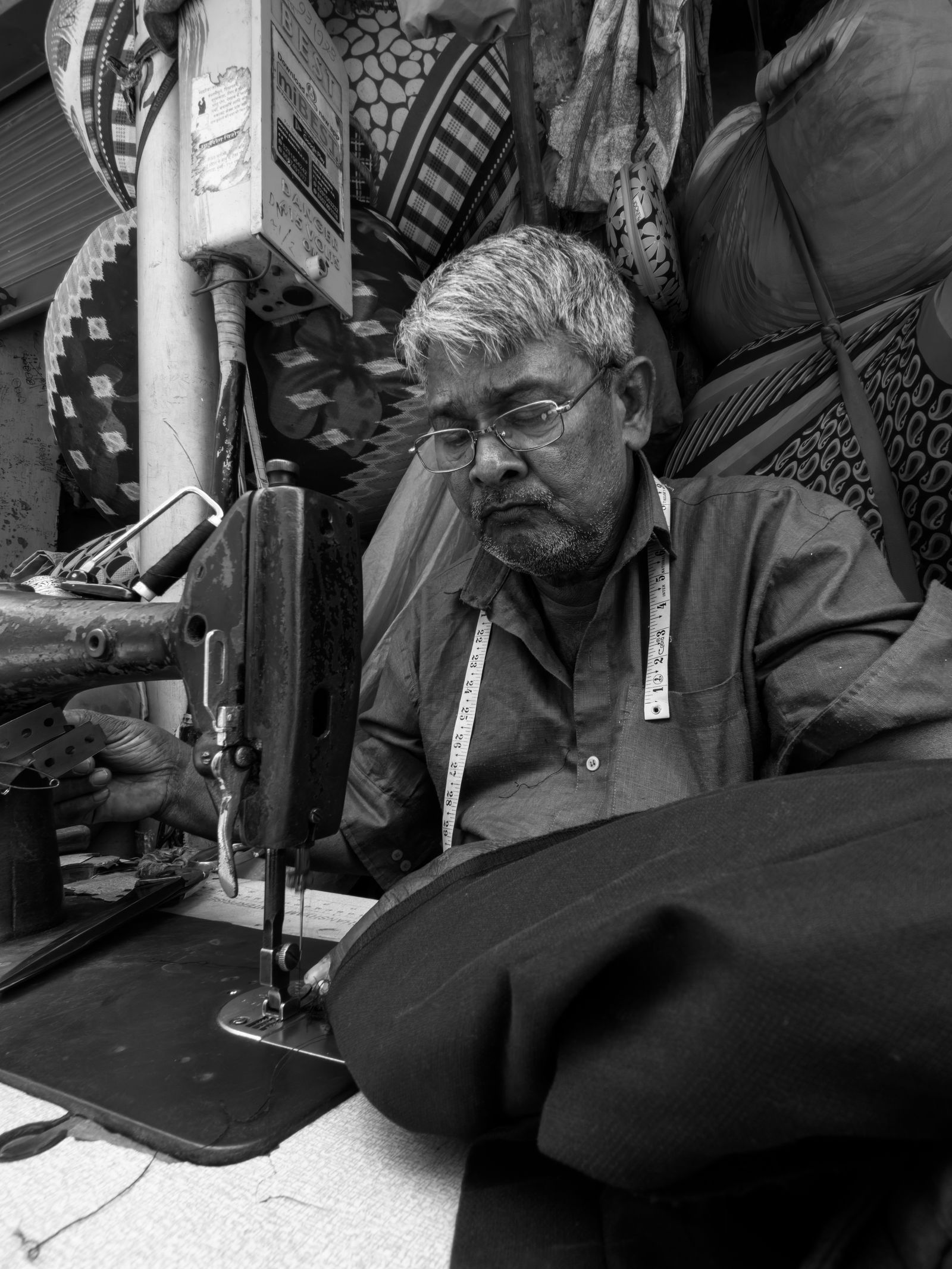
A large share of what women in the state do is productive, skilled and economically significant, and none of it appears in a jobs count. Post-harvest processing. Livestock and poultry. Tailoring on order. Mahua, tamarind, lac and other forest-linked produce. Weaving and craft. Petty trade. Food preparation. Care labour that frees other household members to earn.
Programmes that recognise only formal placement treat all of this as a starting point of zero. That is an accounting error with consequences: it pushes women towards distant wage work that the earlier constraints already rule out, while ignoring existing activity where a modest improvement in inputs, pricing, quality or market access would raise real income immediately.
The alternative is to treat existing work as a base to build on. Better raw material sourcing. Aggregation so that a buyer is worth talking to. Simple costing so pricing is not guesswork. A payment channel. Access to working capital that is not a moneylender. This is what serious enterprise and self-employment support looks like in practice, and it produces income faster than a placement pipeline that leads to a town she cannot reach.
What actually works: designing for access rather than arguing for participation
Put the constraints together and the design brief writes itself. Nothing on this list requires persuading anyone of anything.
- Locate provision close to where women already are. Village or panchayat level delivery beats a well-equipped district centre that most of the target group cannot reach. Proximity is not a compromise on quality; it is the precondition for quality mattering.
- Schedule around the real day. Fit sessions into genuine slack periods, keep them short and frequent rather than long and rare, and build the calendar around agricultural and migration seasons.
- Treat safety as a specification. Group travel, daylight hours, verified workplaces, a named contact who answers, and a complaint route that leads somewhere.
- Engage households early and concretely. Predictable timings, visible premises, honest descriptions of what the training does and does not lead to.
- Make childcare part of the programme. Not as a benefit, as infrastructure.
- Treat home-based and flexible enterprise as a legitimate outcome. Work that fits around care responsibilities is not a lesser result than a factory shift. For many women it is the only outcome that survives contact with their actual week.
- Do the paperwork. Documents, bank accounts, digital payment setup, scheme linkage.
- Build peer groups deliberately. Isolation is one of the strongest predictors of someone leaving work. A woman who knows four others doing the same thing has people to travel with, negotiate with, borrow from and compare prices with. Cohorts should be built so that they outlast the course.
Every item there is a design decision under an institution’s control. That is the point. The failure mode of this sector is spending on persuasion when the binding constraint is logistics.
How Lakshmi Foundation approaches women’s livelihood work
Lakshmi Foundation works in Jharkhand on skill development, employment and entrepreneurship, and the way we describe our own job is straightforward: we connect Jharkhand’s talent to opportunity through skills, mentorship, and access to employers, markets, and capital. The emphasis on access is deliberate. Training that is not attached to a buyer, an employer, a bank or a market is a certificate, and certificates do not pay.
We run a dedicated Women and Livelihood track for one reason only: the access barriers differ. The ability does not. Separating the track lets us solve for timing, distance, childcare, documentation and household confidence explicitly, instead of hoping a general programme absorbs them. Much of this overlaps with our rural and tribal community work, where distance and seasonality shape what is possible for everyone, and where women carry those constraints twice over.
We describe ourselves as a livelihood ecosystem rather than a training institute, because the training is the least difficult part. As we put it internally: skill opens the door, livelihood is what walks through it, and dignity is what stays. We also report outcomes honestly, including the ones that did not work, because a sector that only publishes its successes cannot learn which of its designs are broken.
Conclusion
The barrier to women earning in Jharkhand is not a shortage of capability or desire. It is a stack of practical constraints that programmes are perfectly capable of designing around and mostly choose not to. Distance, timing, safety, household confidence, childcare, documentation and the invisibility of existing work are all addressable, and addressing them is ordinary operational discipline rather than social transformation.
Start from access, income and choice, and the results follow. Start from motivation, and you will spend years explaining why the results did not.