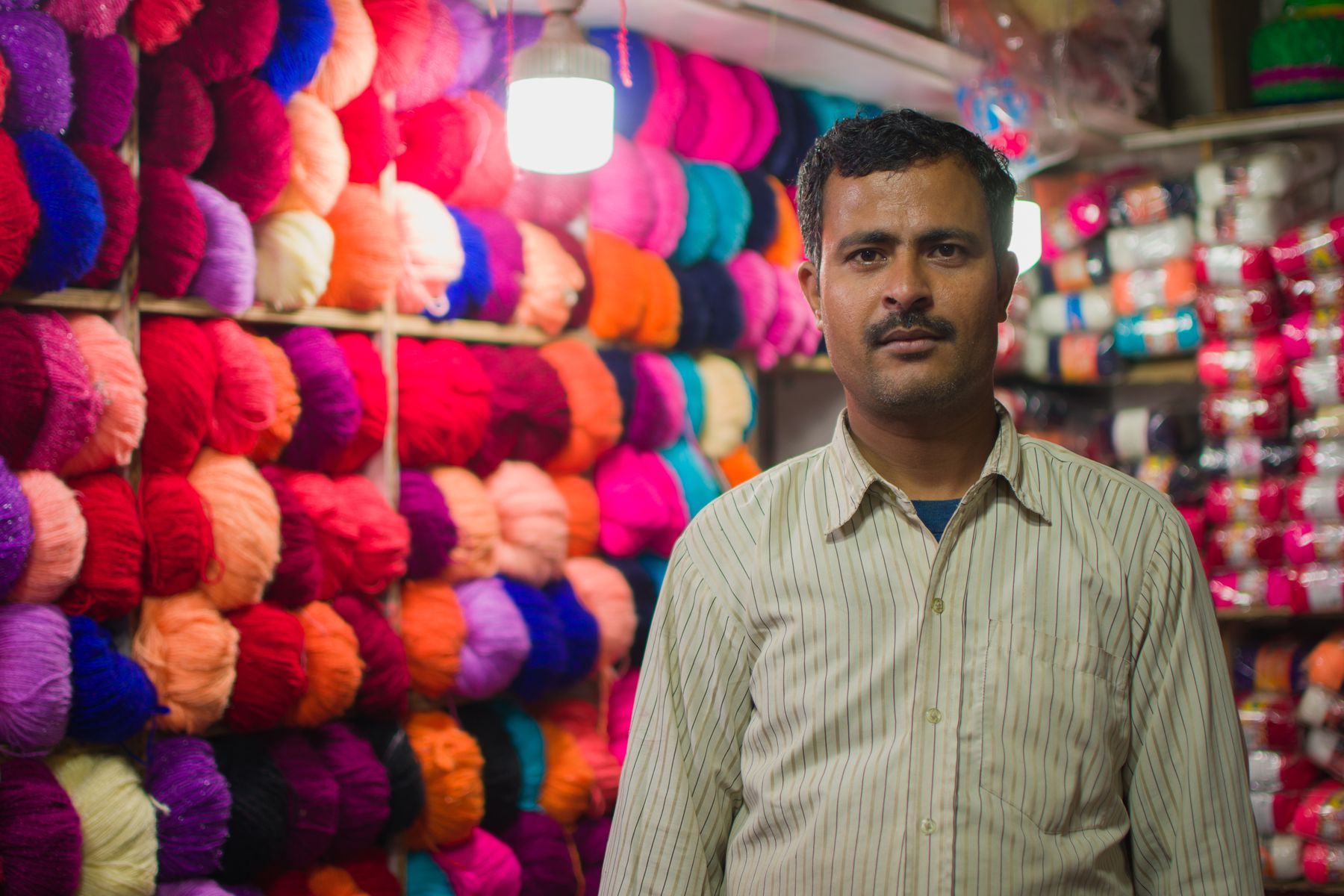
Ask most people what a successful training programme looks like and they will describe a placement letter. A young person finishes a course, an employer signs an offer, the certificate goes up on a wall at home. That picture is real and it matters. But it quietly encodes an assumption that does a great deal of damage: that a salaried job is the proper outcome, and that anything else is what happens to the people who did not make the cut. Under that assumption, rural entrepreneurship India gets treated as a consolation prize, a soft landing for candidates who could not clear an interview. The framing is wrong, and it is expensive.
It is wrong because the arithmetic does not support it. Formal salaried employment in India has never been available at anything like the scale the working-age population requires, and in rural and small-town districts the gap is widest of all. Jharkhand, a state in eastern India with 24 districts and its capital at Ranchi, has a large young population, real productive skill, and a formal job market concentrated in a handful of urban clusters. For a great many people in that state, a small business is not a fallback. It is the most realistic route to a decent income, and for some it is also the most rewarding one: more control over time, more room to grow, and work that stays in the district instead of pulling families apart across a migration corridor.
It is expensive because the consolation-prize framing shapes how enterprise support is designed. If self-employment is what you offer the people you could not place, you will spend accordingly. You will bolt a business module onto the end of a skills course, hand out a template, run a one-day workshop on “how to be an entrepreneur”, refer a few people to a lender, and count the businesses that open. Then you will lose track of them. That is not enterprise support. It is paperwork that resembles enterprise support, and it produces a predictable pattern of quiet failure that nobody records.
A Skill Is Not a Small Business: Why Good Tailors Run Failing Tailoring Shops
The single most common mistake in livelihood work is treating technical competence and commercial competence as the same thing. They are not related in the way people assume.
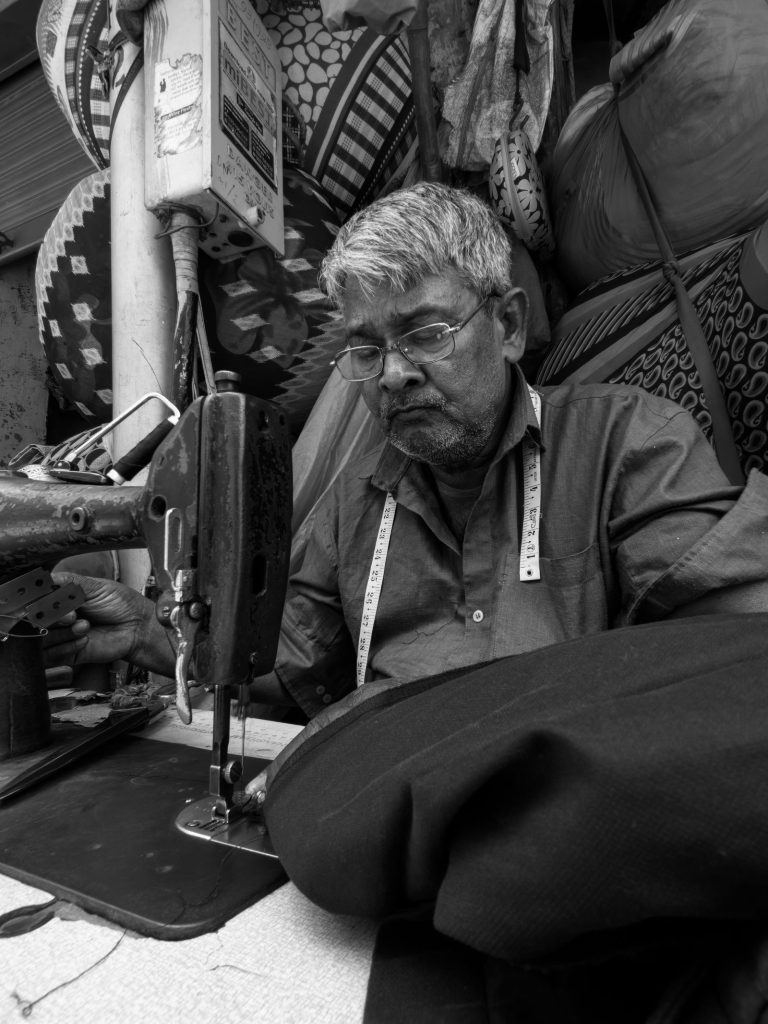
Consider a tailor who genuinely knows the craft. She can cut well, finish cleanly, take a measurement without a second fitting, and turn around alterations faster than anyone in her block. Every technical judgement she makes is sound. Her shop can still close within a year, and the reasons will have almost nothing to do with tailoring.
She may be pricing on materials and time without accounting for rent, thread, machine maintenance, electricity, or the hours she spends not sewing. She may be undercutting the shop down the road because she assumes cheapness is the only lever she has, when in fact her finishing quality would support a higher price if anyone knew about it. She may be extending informal credit to neighbours because refusing feels rude, and discovering three months later that half her revenue exists only as goodwill. She may be buying fabric in small expensive lots because she cannot free up cash for a bulk purchase, permanently locking in a worse margin than her competitors.
None of these are tailoring problems. Pricing is a distinct skill. Customer acquisition is a distinct skill. Working capital management is a distinct skill. Cash-flow timing, the difference between being profitable on paper and being able to pay for thread on Thursday, is a distinct skill and probably the least taught of all. A micro-enterprise demands that one person hold all of them at once, usually with no colleague to divide the load. Training that builds the craft and then waves at the commerce is not preparing anyone for self-employment. It is preparing them for a specific and avoidable disappointment.
The business plan is the least useful document in the room
Enterprise support programmes love business plans, because a business plan is a deliverable. It can be collected, graded, filed and photographed. It also has close to no predictive power for a village-level small business. A written plan assumes a stable set of inputs and a forecastable demand curve, and neither exists for a new shop in a small market town. The plan gets written to satisfy the trainer, not to guide the owner, and it is never opened again.
What a first-time owner actually needs is far more mundane and far more useful: a price that covers real costs, a way to know what came in and went out this week, a named list of people likely to buy in the next month, and a clear view of when money leaves the business versus when it comes back.
The First-Customer Problem: Why Market Linkage Beats Paperwork in Rural Entrepreneurship
Every new enterprise faces one hard threshold before anything else matters: getting the first paying customers, then the next twenty. This is where most support programmes stop and where most businesses actually begin.
The first-customer problem is difficult for reasons that have nothing to do with ambition. A new business has no track record, so buyers have no reason to risk an order. It has no reputation, so it competes only on price against established sellers who can absorb a price war. Its owner often has no professional network beyond family and neighbours, which caps the addressable market at whoever already walks past the door. In a thin rural market, the total number of potential customers within reach may be genuinely small, and the answer is not to sell harder locally but to reach buyers outside the immediate area.
That is what market linkage means, and it is the part of enterprise support most often skipped because it is labour-intensive and cannot be delivered in a classroom. It means knowing which aggregators, retailers, institutional buyers, contractors and online platforms actually purchase what your people make, and making introductions that carry some borrowed credibility. It means helping a producer meet a buyer’s quality specification and delivery schedule before the first order rather than after a rejected consignment. It means, sometimes, helping several small producers meet a volume requirement together that none of them could meet alone. An organisation that takes enterprise development seriously as a pathway spends more of its effort here than on any curriculum.
Working Capital and Cash Flow Kill More Micro-Enterprises Than Bad Ideas Do
Ask why a small business closed and you will usually be told the idea did not work. Look closely and the idea was often fine. What ran out was cash.
The mechanics are unglamorous and nearly universal. A small enterprise pays for inputs before it gets paid for outputs. Raw material, stock, transport and labour all come first. Revenue arrives later, and in many trades it arrives late: an institutional buyer pays in 30 or 60 days, a contractor pays on completion, a wholesale customer pays on the next visit. In the gap sits an owner who is profitable on paper and cannot buy next week’s stock.
This is what kills otherwise sound businesses. A seasonal trade has months of outflow before a burst of inflow, and nobody planned for the trough. A single large order, the kind that feels like a breakthrough, requires more input purchase than the owner can fund, so it is either turned down or accepted on terms that wipe out the margin. One late payment cascades into a missed supplier commitment, which costs the supplier relationship, which raises input prices permanently.
Very little enterprise training addresses this directly, partly because it requires talking about money in concrete terms rather than motivational ones. Yet the practical interventions are not complicated. Teach owners to separate business cash from household cash, which is the first discipline and the hardest. Teach a simple weekly record that shows what came in, what went out and what is owed. Help owners map their own cash cycle so they can see the trough coming. Build access to short, appropriately sized working-capital finance rather than only start-up seed capital, because most enterprises need the second loan more urgently than the first.
Credit access is a trust and documentation problem, not only a money problem
It is convenient to describe the financing gap as a shortage of capital. Often the more accurate description is a shortage of legibility. Formal lenders are not generally refusing to lend to small rural enterprises out of indifference. They are refusing because the applicant, as presented to them, is unreadable.
A lender assessing a first-time borrower wants evidence of repayment capacity. What arrives instead is an application with no business records, no separation between household and enterprise income, no documented order history, no collateral and no credit history. The loan officer is not evaluating a business. They are evaluating an absence of information, and the safe answer to an absence of information is no.
Which means the practical work of improving livelihood finance is often documentation work: helping people register appropriately, maintain the simple records that make a business legible, build a demonstrable order and repayment history, and prepare applications that answer the questions a lender actually asks. It also means relationship work with lenders and with the public schemes that already exist on paper, so that an applicant arrives introduced rather than cold. Introducing a borrower who has kept six months of records and can show a repeat buyer changes the conversation entirely.
Sequencing capital correctly
There is a related error worth naming: giving a large grant or loan at the start, before the owner has any operating experience, and treating the disbursement as the achievement. Money arriving before judgement is usually money spent on the wrong things. Capital works better staged, tied to demonstrated progress, and small enough at first that the inevitable early mistakes are survivable.
Nobody to Ask: The Isolation of Self-Employment
People who have only had salaried jobs tend to underestimate this one. In an organisation, when something goes wrong you ask someone. There is a colleague who has seen the problem, a manager who decides, a finance person who knows the rule. A sole proprietor has none of that. Every decision, however small, terminates with them, and there is often literally nobody in their daily life who has faced the same question.
The consequences are practical, not merely emotional. A buyer demands a discount after delivery and the owner has no one to tell them this is a known tactic and how to respond. A supplier’s price rises and the owner does not know whether to absorb it or pass it on. Business is slow for six weeks and the owner cannot tell whether this is a seasonal dip that everyone in the trade sees or the beginning of the end, so they either panic-cut prices or wait too long. Growth decisions get postponed indefinitely because the downside is unbounded and unshared.
Two things address this, and both are cheap relative to their effect. The first is mentorship from someone who has actually run a small business, ideally in a comparable market, not a trainer who has read about running one. The second is a peer group: a working circle of other owners who meet regularly, compare prices, share buyer information, warn each other about non-paying customers and provide the ordinary professional company that employees get for free.
The First Twelve to Eighteen Months Are the Real Test of a New Enterprise
The launch is the easy part. Programmes measure it because it is measurable and because it happens inside the funding cycle. But a business that has opened has not yet proved anything. The genuine test period runs roughly twelve to eighteen months, and it contains every failure mode described above in sequence.
In the first months, initial capital is still cushioning mistakes and early curiosity from local customers inflates demand. Then the cushion runs out, the novelty fades, and the enterprise has to survive on repeat business and real pricing. Somewhere in that window comes the first seasonal trough, the first late payment, the first competitor response, the first order too large to fund, and the first serious question of whether to keep going. Support that ended at launch is absent for all of it.
This is also why the standard metric is misleading. Counting “enterprises launched” measures the moment of least information. The honest measures are survival at twelve and twenty-four months, whether owner income actually rose, whether the business added even one more worker, and whether it repaid what it borrowed. These numbers are harder to collect and less flattering to report, which is precisely why they are worth collecting.
What Genuine Support for Rural Entrepreneurship in India Looks Like
Put the pieces together and the design is not mysterious. It is simply more demanding than a workshop.
- Mentorship from practitioners. Guidance from people who have run a small business in a comparable market and can answer specific operational questions, available over months rather than in a single session.
- Market and buyer linkage as a core function. Active introductions to real buyers, help meeting quality and delivery requirements, and aggregation so small producers can serve orders they could not fill individually.
- Pricing and record-keeping, taught concretely. Costing that includes the owner’s own time, household and business money kept separate, and a weekly record simple enough that it is actually maintained.
- Structured routes to early capital. Staged finance matched to the stage of the business, working-capital access and not only start-up funding, plus the documentation and lender relationships that make an application legible.
- Peer groups. Standing circles of owners who meet, compare notes and stop each other from making avoidable decisions alone.
- Follow-up measured in survival and income. Contact through the full test period, with success defined as businesses still trading and earning more, not businesses opened.
None of that is exotic. It is just work that continues after the photograph.
Two pathways, equal design effort
The argument here is not that everyone should start a business. That would be its own kind of romanticism, and it would fail people who are better served by steady wages, predictable hours and someone else carrying the risk. Employment is a genuine and often superior outcome, and matching people to employers who will actually hire and keep them is skilled work in its own right.
The argument is that the two pathways deserve equal design effort. At present they do not get it. Placement machinery is well developed and enterprise support is usually an appendix. Correcting that is not a matter of enthusiasm but of building the second pathway with the same seriousness as the first: real linkages, real follow-up, real capital, real accountability for what happened a year later.
And the honest job of a livelihood organisation is not to push people down whichever route it is better at delivering. It is to help each person work out which one fits their circumstances, their risk tolerance, their family obligations and their temperament, and then to support that choice properly. Some people need a job. Others need to build one. Deciding that in advance, on their behalf, is where most programmes go wrong.
Jharkhand’s Talent and the Access Gap: How Lakshmi Foundation Approaches Livelihood Work
Lakshmi Foundation works on the premise that Jharkhand’s problem was never a shortage of talent. It is a shortage of access: to employers who are hiring, to buyers who will pay a fair price, to capital that treats a small producer as creditworthy, and to people who have done the thing before and can say what to do next. The state has skill in abundance. What it has been short of is the connective tissue between that skill and the market that would pay for it.
So the Foundation is built as a livelihood ecosystem rather than a training institute. Training alone produces certificates. An ecosystem connects skills development to mentorship, to employers, to markets and to capital, and stays involved long enough to find out whether it worked. In practice that means enterprise support designed as a full pathway rather than a closing module, and it means the work in rural and tribal districts starts from what people already know how to do rather than from what they are assumed to lack.
Skill opens the door. Livelihood is what walks through it. Dignity is what stays.
That last word is the point. A person who has built something that supports their household, on their own terms, in their own district, holds a position that no certificate confers. It is also why the Foundation commits to reporting outcomes honestly, including the businesses that did not survive and the placements that did not hold. Enterprise work has a real failure rate. Any organisation claiming otherwise is either not following up or not telling you. Those who want to contribute to that work, as mentors, as buyers, as employers or as funders, can find the ways to get involved.
Conclusion: Two Pathways, One Honest Question
Self-employment is not what is left over when the placement drive ends. In much of India it is the majority experience of working life, and treating it as a lesser outcome guarantees it will be served by lesser design. The fix is not more enthusiasm for entrepreneurship. It is the unglamorous machinery that decides whether a new enterprise reaches its second year: buyers, pricing, working capital, records, a mentor, a peer group, and someone still asking how it is going eighteen months later. Build that with the same rigour as a placement pipeline, and both pathways start to work.